Published on:18-09-2026
Last updated:18-09-2026
The connection between hypertension and stroke is one of the most dangerous and most preventable in medicine. Nearly 80% of first-time stroke patients have blood pressure above 140/90 mmHg. Uncontrolled high blood pressure makes a person 4 to 6 times more likely to suffer a stroke. Yet nearly half of the 120 million Americans living with hypertension don't have it under control and many don't even know their numbers.
Table of Contents
- How Hypertension Causes Stroke
- Ischemic Stroke vs Hemorrhagic Stroke
- Stroke Warning Signs: The BE-FAST Method
- Who Is Most at Risk?
- Blood Pressure Levels and Stroke Danger
- How to Reduce Your Stroke Risk
- What About Silent Strokes?
- Conclusion
- Frequently Asked Questions
How Hypertension Causes Stroke
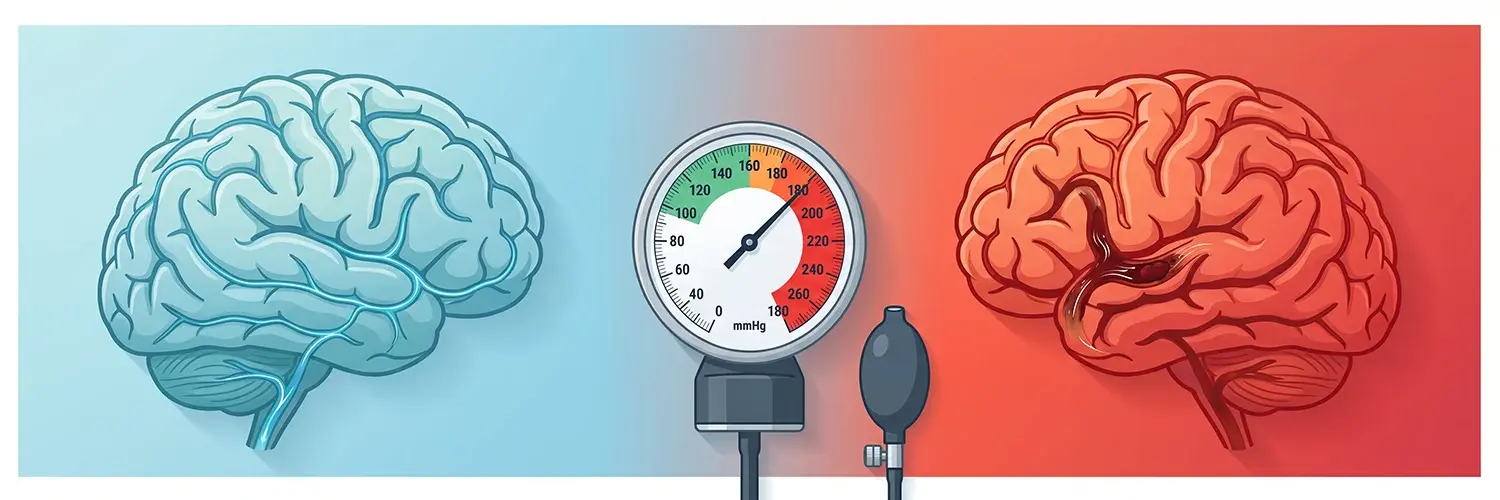
High blood pressure damages blood vessel walls throughout the body, but arteries supplying the brain are especially vulnerable. Sustained pressure above normal levels causes these vessels to stiffen, narrow and weaken over months and years, often without producing a single symptom.
This is what makes hypertension so dangerous. It works silently in the background while the brain pays the price. Damaged arteries become prone to blockages from blood clots, leading to ischemic stroke. They can also rupture under pressure, causing hemorrhagic stroke. Both outcomes cut off oxygen to brain tissue and brain cells begin dying within minutes.
Hypertension also speeds up atherosclerosis, the buildup of fatty deposits inside blood vessels in the brain and throughout the body. When a piece of plaque breaks off, it can travel to the brain and block a smaller artery entirely. This mechanism is behind the majority of strokes in patients with uncontrolled hypertension, making it one of the most common cerebrovascular disease pathways.
Ischemic Stroke vs Hemorrhagic Stroke
Strokes fall into two categories and high blood pressure contributes to both.
Ischemic Stroke
Ischemic strokes account for about 87% of all cases. They happen when a blood clot blocks an artery supplying the brain. Hypertension promotes this by damaging artery walls, encouraging plaque formation and creating conditions where clots develop more easily.
Hemorrhagic Stroke
Hemorrhagic strokes occur when a weakened vessel in the brain bursts and bleeds into surrounding tissue. Though less common (about 13% of cases), they are far more deadly with a mortality rate nearly double that of ischemic strokes. Chronic high blood pressure is the leading cause, as years of elevated pressure weakens vessel walls to the point of rupture.
Stroke Warning Signs: The BE-FAST Method
Hypertensive stroke symptoms appear suddenly and require immediate action. The stroke warning signs BE-FAST acronym is the current standard:
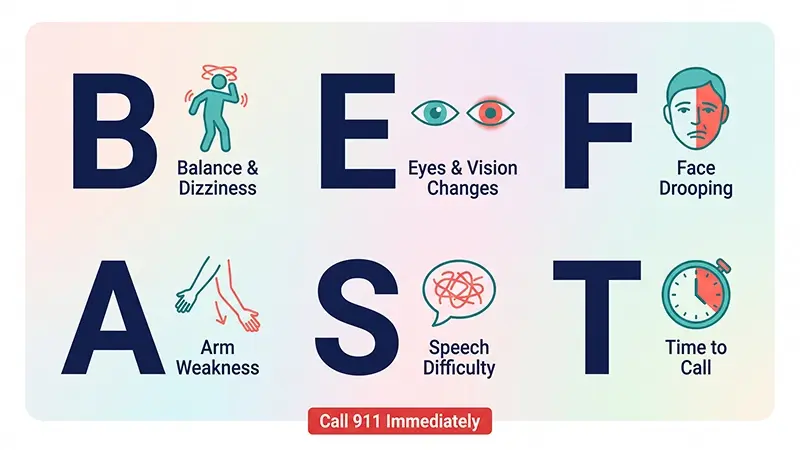
- B — Balance: Sudden loss of balance or coordination
- E — Eyes: Sudden blurred or double vision
- F — Face: One side of the face droops or feels numb
- A — Arms: One arm drifts downward when both are raised
- S — Speech: Slurred, confused or difficult speech
- T — Time: Call 911 immediately, every minute without treatment destroys roughly 1.9 million brain cells
A sudden severe headache with no known cause, confusion or numbness on one side of the body are also warning signs. These should never be dismissed as stress, especially in anyone with a history of high blood pressure.
Who Is Most at Risk?
Anyone with uncontrolled hypertension faces increased stroke risk, but certain groups are significantly more vulnerable:
- Adults over 55, as stroke risk doubles with each decade and age-related arterial stiffness compounds the damage
- Black Americans, who have the highest hypertension rates globally and are nearly twice as likely to have a first stroke
- People with diabetes, since diabetes and hypertension together multiply cardiovascular risk factors considerably
- Smokers, because smoking accelerates arterial damage and doubles stroke risk on its own
- Those with atrial fibrillation, which creates conditions for blood clots that travel to the brain
- Anyone with a family history of stroke before age 65
Young adults are not exempt either. High blood pressure is rising sharply in people under 40 and is now behind a growing share of early strokes.
Blood Pressure Levels and Stroke Danger
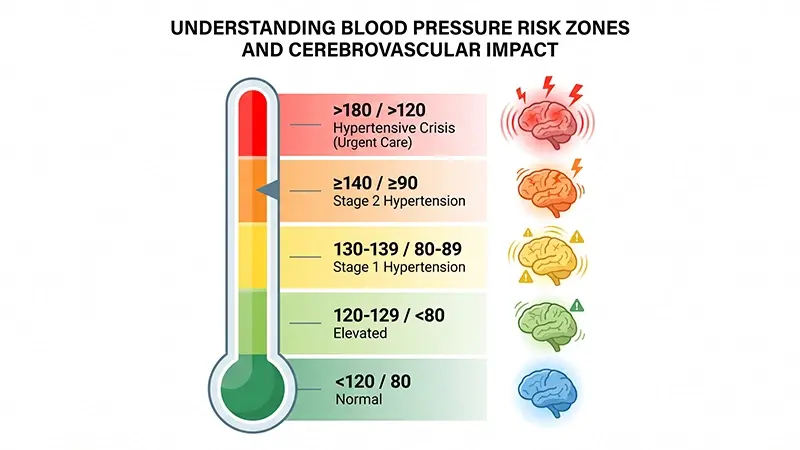
There is no single threshold where high blood pressure stroke risk suddenly begins. Risk rises on a continuous gradient. But clinical data shows clear danger zones.
| BP Category | Systolic / Diastolic | Stroke Risk Level | Action Required |
|---|---|---|---|
| Normal | Below 120/80 | Baseline | Maintain lifestyle |
| Elevated | 120-129 / below 80 | Slightly increased | Lifestyle changes |
| Stage 1 Hypertension | 130-139 / 80-89 | ~50% higher | Lifestyle + possible medication |
| Stage 2 Hypertension | 140+ / 90+ | 2-3x higher | Medication + lifestyle |
| Hypertensive Crisis | 180+ / 120+ | Immediate danger | Emergency care |
A hypertensive crisis emergency requires immediate medical attention. But even moderately elevated systolic blood pressure sustained over years can carry greater cumulative risk than a single spike that gets treated quickly.
Regular blood pressure monitoring frequency matters here. Adults with normal readings should check at least once a year. Those with elevated or Stage 1 readings need checks every 3 to 6 months and patients with Stage 2 hypertension should monitor monthly or more.
Tracking readings at home helps identify patterns your doctor might miss during a single office visit.
How to Reduce Your Stroke Risk
Stroke prevention for high blood pressure starts with controlling your numbers. For most patients, that means medication combined with sustained lifestyle changes.
Medical Management
Antihypertensive medication for stroke prevention, including ACE inhibitors, ARBs, calcium channel blockers, and diuretics, remains the most effective approach. A 10 mmHg reduction in systolic pressure lowers stroke risk by approximately 30 to 40%. The right medication depends on the patient's full health profile and ongoing lab work and dosage adjustments are part of proper management.
Lifestyle Changes
Medication works best alongside consistent daily habits:
- Keep sodium under 2,300 mg daily (under 1,500 mg for high-risk patients)
- Maintain a healthy weight, as losing 5 to 10 pounds can lower systolic pressure by 5 to 10 mmHg
- Get at least 150 minutes of moderate exercise weekly (brisk walking counts)
- Limit alcohol and quit smoking, since stroke risk drops significantly within 2 to 5 years after quitting
- Manage stress through regular sleep and structured downtime
These changes work alongside medical care, not as a replacement. Patients over 40 should also discuss how blood pressure interacts with cholesterol, blood sugar and overall cardiac function with their physician.
What About Silent Strokes?
Many people with long-term uncontrolled hypertension have experienced small strokes they never noticed. These silent strokes don't produce obvious symptoms, but they cause measurable brain damage over time.
They often show up incidentally on brain scans. Uncontrolled hypertension complications like silent strokes increase the risk of dementia, cognitive decline, and future full-scale strokes.
Conclusion
Hypertension and stroke are directly connected and the damage happens gradually, often without warning. High blood pressure weakens and narrows the arteries feeding your brain until a blockage or rupture occurs. But this connection is preventable. Blood pressure is measurable, treatable, and controllable. Every 10-point drop in systolic pressure meaningfully reduces your risk.
At Springfield Medical Clinic, patients receive comprehensive hypertension management including regular monitoring, medication optimization, and personalized lifestyle guidance.
If your blood pressure has been running high, or if you haven't had it checked recently, schedule an appointment today.
Frequently Asked Questions
- Can high blood pressure cause a stroke without any warning signs?
Yes, hypertension typically produces no symptoms, so a stroke can be the first visible sign of long-term uncontrolled blood pressure. - What blood pressure level is considered a stroke risk?
Any reading consistently above 130/80 mmHg increases stroke risk, and readings above 180/120 require immediate emergency care. - Can controlling blood pressure actually prevent a stroke?
Lowering systolic pressure by just 10 mmHg reduces stroke risk by 30 to 40% according to large-scale clinical trials. - How often should blood pressure be checked?
At least annually for normal readings, every 3 to 6 months for elevated numbers and monthly for patients on medication or with Stage 2 hypertension. - Is a transient ischemic attack (TIA) caused by high blood pressure?
Hypertension is a leading cause of TIA, and roughly 1 in 3 people who experience one will eventually have a full stroke without treatment. - Can you have a stroke from a single blood pressure spike?
A single hypertensive crisis above 180/120 mmHg can trigger a stroke, but sustained elevation over months or years is the more common cause.