Published on:12-08-2026
Last updated:12-08-2026
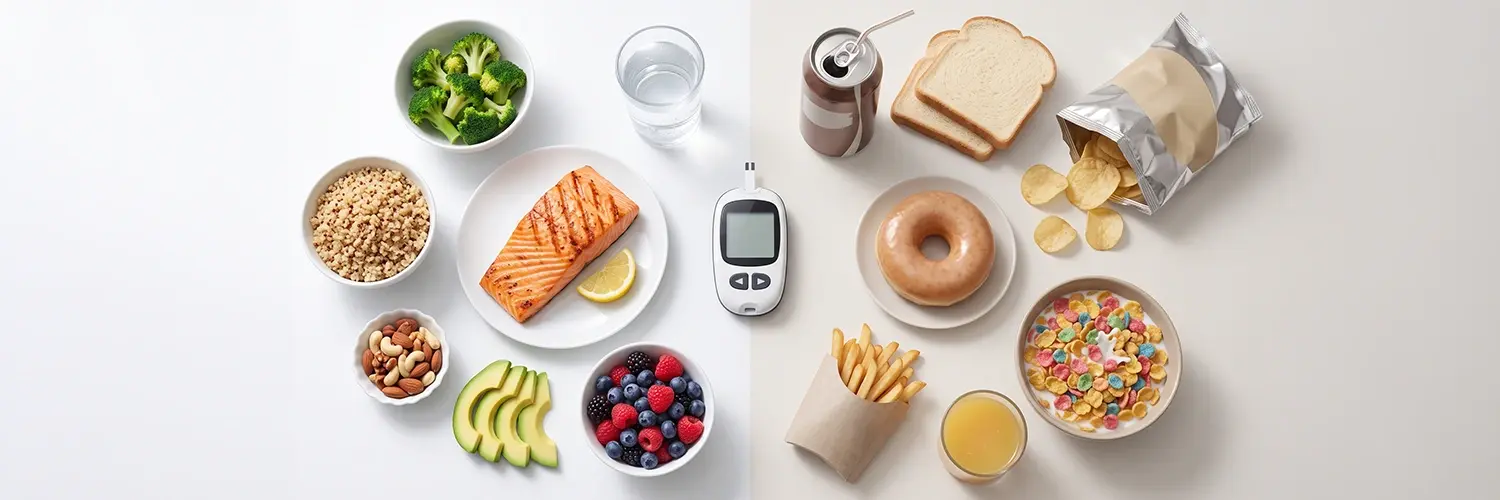
For diabetic patients, the best foods for blood sugar control are non-starchy vegetables, lean proteins, whole grains, and healthy fats. The worst are refined carbohydrates, sugary beverages, processed snacks, and fried foods. With over 37 million Americans living with diabetes, knowing which foods stabilize glucose and which ones cause dangerous spikes is one of the most important daily decisions a patient can make.
This guide breaks down exactly what to eat and what to avoid, with practical tips for building meals that support long-term glucose control. If you've been wondering why your blood sugar spikes even when you eat healthy, the answer often comes down to specific food choices most people overlook.
Table of Contents
- How Does Food Affect Blood Sugar in Diabetic Patients?
- What Are the Best Foods for Blood Sugar Control?
- What Are the Worst Foods for Diabetic Patients?
- Best vs Worst Foods: Quick Comparison
- How Should Diabetic Patients Build a Balanced Meal?
- What Role Does Meal Timing Play in Blood Sugar Control?
- Conclusion
- Frequently Asked Questions
How Does Food Affect Blood Sugar in Diabetic Patients?
Every food you eat is broken down into glucose, which enters the bloodstream and triggers insulin release. In diabetic patients, this process is impaired either the body doesn't produce enough insulin (Type 1) or the cells resist it (Type 2), causing blood sugar to stay elevated longer than it should.
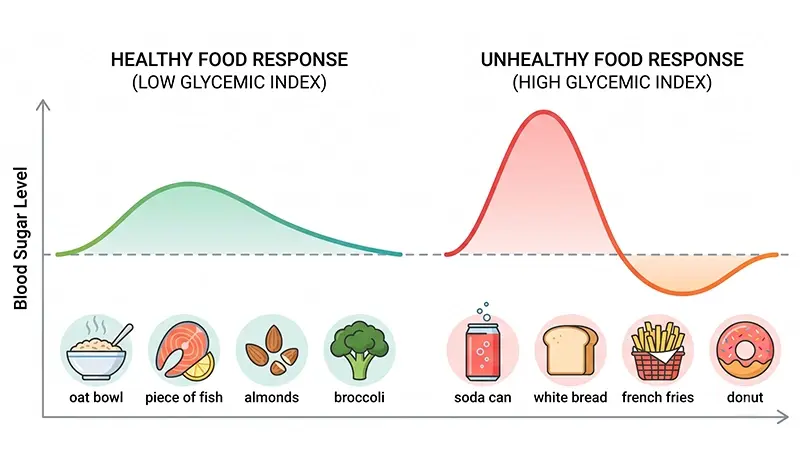
Three key factors determine how a food affects blood sugar: its glycemic index (how quickly it raises glucose), its fiber content (which slows absorption), and its overall carbohydrate load. Foods high in refined carbs and low in fiber cause rapid spikes. Foods rich in fiber, protein, and healthy fats produce a slower, more controlled glucose response.
Understanding this mechanism is the foundation of every dietary decision for diabetic patients. It also explains why insulin resistance develops gradually in many people long before a formal diabetes diagnosis.
What Are the Best Foods for Blood Sugar Control?
The best foods for diabetic patients are nutrient-dense, low-glycemic options that provide steady energy without causing glucose spikes. These foods share common traits: high fiber, lean protein, healthy fats and minimal processing.
Non-Starchy Vegetables
Leafy greens like spinach, kale and broccoli are among the most blood-sugar-friendly foods available. They are extremely low in carbohydrates, high in fiber and packed with vitamins and minerals. Diabetic patients can eat these in generous portions without worrying about glucose impact.
Lean Proteins
Chicken breast, turkey, fish, eggs and tofu provide satiety without raising blood sugar. Protein slows the absorption of carbohydrates when eaten together, which helps prevent post-meal spikes. Fatty fish like salmon and mackerel also deliver omega-3 fatty acids, which support cardiovascular health a critical concern for diabetic patients.
Whole Grains
Steel-cut oats, quinoa, brown rice and barley have a lower glycemic index than their refined counterparts. The intact fiber structure slows digestion, resulting in a more gradual glucose rise. Portion control still matters even whole grains contain carbohydrates.
Nuts, Seeds, and Healthy Fats
Almonds, walnuts, chia seeds, flaxseeds, avocados and olive oil provide healthy fats that slow gastric emptying and improve insulin sensitivity. A small handful of almonds before a meal has been shown to reduce post-meal glucose spikes by up to 30% in some studies.
Legumes
Lentils, chickpeas, black beans and kidney beans are high in both fiber and protein. They have a low glycemic index and produce one of the most stable blood sugar responses of any carbohydrate source.
What Are the Worst Foods for Diabetic Patients?
The worst foods for diabetic patients are those that cause rapid blood sugar spikes, provide empty calories and increase insulin resistance over time. These foods are typically high in refined carbs, added sugars and unhealthy fats.
Sugary Beverages
Soda, fruit juice, sweetened iced tea and energy drinks are the single biggest dietary threat to blood sugar control. A single 12-ounce can of regular soda contains roughly 39 grams of sugar enough to spike blood glucose levels within 15 minutes. Liquid sugar bypasses the digestive slowdown that solid foods provide, hitting the bloodstream almost immediately.
White Bread, White Rice, and Refined Grains
Refined grains have been stripped of their fiber and bran, leaving mostly starch that converts to glucose rapidly. For diabetic patients, swapping white rice for brown rice or cauliflower rice and choosing whole-grain bread over white bread can make a measurable difference in daily readings.
Processed and Packaged Snacks
Chips, crackers, cookies and pastries combine refined flour, added sugar and unhealthy fats the worst possible combination for blood sugar. Many "low-fat" snacks compensate by adding extra sugar, making them equally problematic.
Fried Foods
French fries, fried chicken and other deep-fried foods are calorie-dense and promote insulin resistance. The combination of high carbohydrates (breading) and saturated fats creates a prolonged blood sugar elevation that can last 4 to 6 hours after eating.
Flavored Yogurts and Sweetened Cereals
Many foods marketed as "healthy" are loaded with hidden sugar. A single serving of flavored yogurt can contain 20+ grams of added sugar. Sweetened breakfast cereals often have more sugar per serving than a candy bar. Diabetic patients should always check nutrition labels for total carbohydrate and added sugar content.
Best vs Worst Foods: Quick Comparison
This table provides a side-by-side reference for diabetic patients making daily food decisions:
| Category | Best Choice | GI Level | Worst Choice | GI Level |
|---|---|---|---|---|
| Grains | Oats, quinoa, barley | Low (≤55) | White bread, white rice | High (70+) |
| Protein | Fish, chicken, eggs | Minimal impact | Fried chicken, processed meat | Moderate-High |
| Beverages | Water, unsweetened tea | None | Soda, fruit juice | Very High |
| Snacks | Nuts, seeds, vegetables | Low | Chips, cookies, pastries | High |
| Dairy | Plain Greek yogurt | Low | Flavored yogurt, ice cream | High |
| Fats | Olive oil, avocado | None | Trans fats, fried foods | Indirect spike |
Understanding how A1C reflects long-term blood sugar patterns can help diabetic patients see how consistent food choices, not individual meals, shape overall glucose control.
How Should Diabetic Patients Build a Balanced Meal?
The most effective meal structure for diabetic patients follows the plate method recommended by the American Diabetes Association: fill half the plate with non-starchy vegetables, one quarter with lean protein and one quarter with a complex carbohydrate.
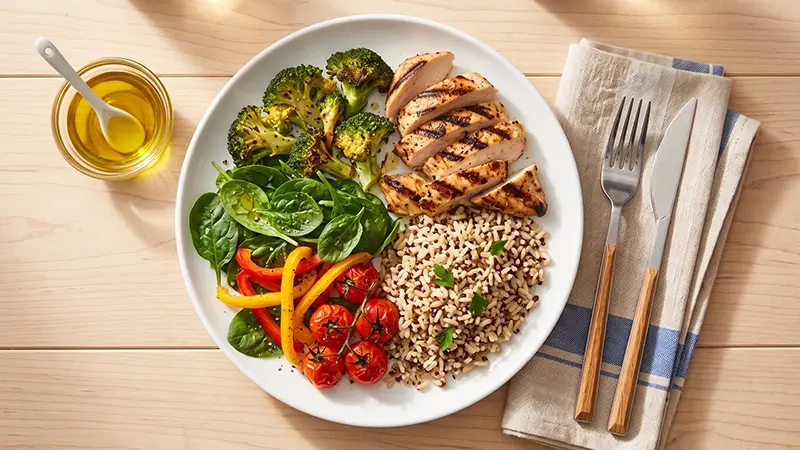
This approach automatically controls portion sizes and balances macronutrients without requiring calorie counting. Adding a source of healthy fat a drizzle of olive oil, a few slices of avocado further slows glucose absorption and improves satiety.
Pairing this approach with other simple lifestyle adjustments like regular physical activity and consistent sleep supports the dietary changes and improves overall metabolic health.
What Role Does Meal Timing Play in Blood Sugar Control?
Meal timing matters almost as much as food selection for diabetic patients. Eating at consistent times each day helps the body anticipate and manage insulin needs more effectively. Skipping meals often leads to overeating later, which causes larger glucose spikes than smaller, regularly spaced meals.
Research shows that eating the largest meal earlier in the day and keeping dinner lighter produces better fasting glucose numbers the next morning. Spacing meals 4 to 5 hours apart and including a small protein-rich snack between meals (if needed) prevents the glucose rollercoaster that many diabetic patients experience.
Late-night eating is particularly problematic. The body's insulin sensitivity decreases in the evening, meaning the same food eaten at 9 PM will raise blood sugar more than if eaten at noon.
Conclusion
For diabetic patients, food choices are the most controllable factor in daily blood sugar management. The best foods non-starchy vegetables, lean proteins, whole grains, nuts, and healthy fats produce slow, steady glucose responses. The worst foods sugary drinks, refined carbs, processed snacks, and fried foods cause rapid spikes that compound into long-term damage.
Small, consistent dietary changes produce the most sustainable results. Swapping one refined carbohydrate for a whole grain, adding vegetables to every meal and eliminating liquid sugar are three changes that can measurably lower A1C within months.
At Springfield Medical Clinic, diabetic patients receive personalized diabetes management that includes dietary guidance, A1C monitoring, medication management and ongoing support tailored to each patient's health needs. If your blood sugar has been difficult to control through diet alone or if you haven't had a comprehensive metabolic evaluation recently, schedule an appointment and take a proactive step toward better glucose control.
Frequently Asked Questions
- What fruit is best for diabetic patients?
Berries, green apples and citrus fruits have the lowest glycemic impact. They are high in fiber and antioxidants while being relatively low in sugar compared to tropical fruits like mangoes, bananas and pineapples. - How many carbs should a diabetic patient eat per meal?
Most guidelines recommend 30 to 45 grams of carbohydrates per meal for diabetic patients, though the exact amount depends on medication, activity level and individual glucose response. A healthcare provider can help determine the right target. - Is rice bad for diabetic patients?
White rice has a high glycemic index and can spike blood sugar quickly. Brown rice, basmati rice and cauliflower rice are better alternatives that produce a slower glucose response. - Can diabetic patients eat bananas?
In small portions and paired with protein or fat, bananas can fit into a diabetic diet. However, ripe bananas have a higher glycemic index than slightly green ones and should be eaten in moderation. - Does drinking water help lower blood sugar?
Water doesn't directly lower blood sugar, but staying hydrated helps the kidneys flush excess glucose through urine. Dehydration can concentrate blood sugar levels, making readings appear higher.