Published on:10-07-2026
Last updated:10-07-2026
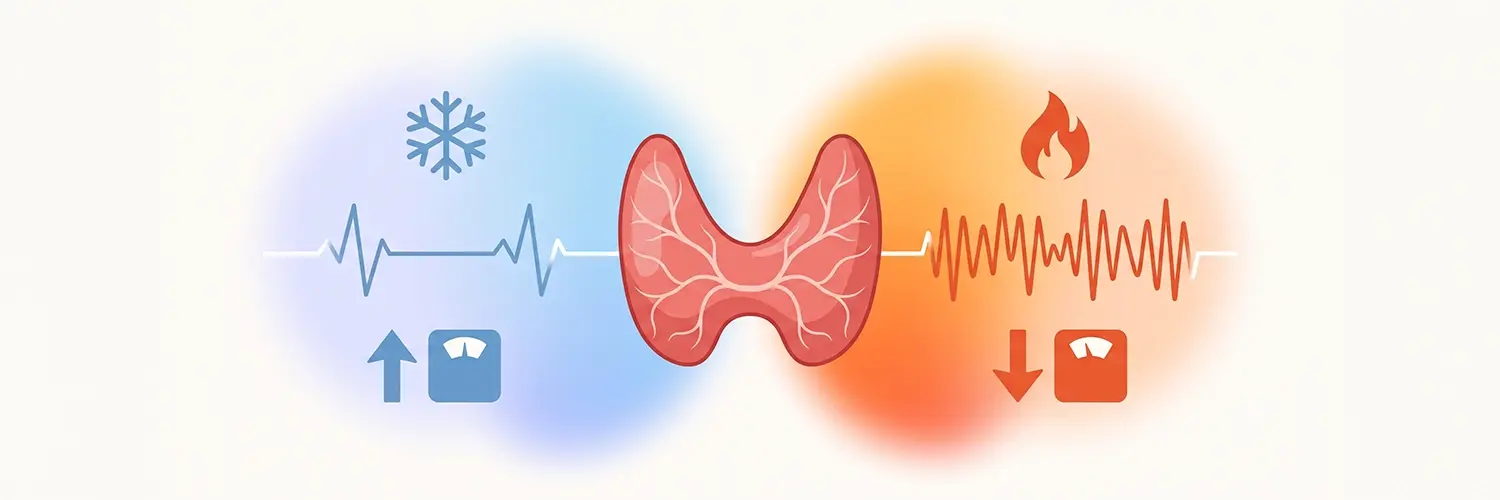
Understanding hypothyroidism vs hyperthyroidism starts with one fact most people overlook: these two conditions produce nearly opposite symptoms, which is exactly why they get confused with each other or missed entirely. A thyroid hormone imbalance affects an estimated 20 million Americans, and more than half don't even know they have one.
If you've been dealing with fatigue, weight changes or mood shifts that don't add up, this guide can help you ask the right questions.
Table of Contents
- What Does the Thyroid Actually Do?
- What Is Hypothyroidism?
- What Is Hyperthyroidism?
- Hypothyroidism vs Hyperthyroidism: Side-by-Side Comparison
- What Causes Each Condition?
- Who Is Most at Risk?
- How Are Thyroid Disorders Diagnosed?
- Treatment Options
- Can You Have Both Conditions?
- When to See a Doctor
- Conclusion
- Frequently Asked Questions
What Does the Thyroid Actually Do?
The thyroid is a butterfly-shaped gland at the base of your neck. It produces two hormones, T3 (triiodothyronine) and T4 (thyroxine), that regulate metabolism, heart rate, body temperature and energy levels. Your pituitary gland controls this process by releasing TSH (thyroid-stimulating hormone). When thyroid hormone levels drop, TSH rises to push production up. When levels climb too high, TSH drops to slow things down. This feedback loop keeps your body in balance and when it breaks, the result is either an underactive thyroid or an overactive thyroid, clinically known as hypothyroidism and hyperthyroidism.
What Is Hypothyroidism?
Hypothyroidism or an underactive thyroid, means the gland isn't producing enough hormones. Everything slows down: metabolism, digestion, cognitive function and energy. It's the more common of the two conditions. Nearly 5 out of every 100 Americans aged 12 and older have some form of it and women are 5 to 9 times more likely than men to develop it.
Common Symptoms of Hypothyroidism
- Persistent fatigue and low energy
- Unexplained weight gain or difficulty losing weight
- Cold intolerance
- Dry skin, brittle nails and thinning hair
- Constipation
- Muscle weakness and joint stiffness
- Depression, brain fog or mood changes
- Slow heart rate
- Irregular or heavy menstrual periods
These tend to develop so gradually that most people assume it's just stress or aging.
What Is Hyperthyroidism?
Hyperthyroidism is the opposite. The thyroid overproduces hormones and everything speeds up: heart rate, metabolism, nervous system activity. Overt hyperthyroidism affects roughly 0.5% of the US population, while subclinical forms affect around 3.2% of adults.
Common Symptoms of Hyperthyroidism
- Rapid or irregular heartbeat (palpitations)
- Unintentional weight loss despite normal or increased appetite
- Heat intolerance and excessive sweating
- Nervousness, irritability or anxiety
- Trembling hands
- Difficulty sleeping
- Frequent bowel movements or diarrhea
- Muscle weakness, especially in the thighs and upper arms
- Eye problems such as bulging or irritation (in Graves' disease)
Because these symptoms overlap with stress and psychiatric conditions, hyperthyroidism is frequently misdiagnosed before thyroid labs are checked.
Hypothyroidism vs Hyperthyroidism: Side-by-Side Comparison
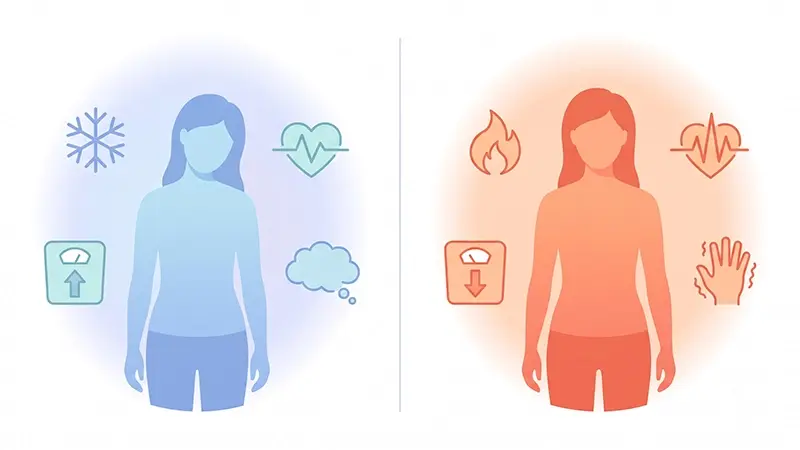
| Feature | Hypothyroidism | Hyperthyroidism |
|---|---|---|
| Thyroid Activity | Underactive | Overactive |
| Metabolism | Slowed down | Sped up |
| Weight | Weight gain | Weight loss |
| Heart Rate | Slow (bradycardia) | Fast or irregular (tachycardia) |
| Energy | Fatigue, sluggishness | Restlessness, hyperactivity |
| Mood | Depression, brain fog | Anxiety, irritability |
| Digestion | Constipation | Frequent bowel movements |
| Heat/Cold Tolerance | Sensitive to cold | Sensitive to heat |
| TSH Level | High | Low |
| T3 and T4 Levels | Low | High |
| Most Common Cause | Hashimoto's thyroiditis | Graves' disease |
Despite producing opposite effects, both conditions share one thing: they affect nearly every system in the body and get progressively worse without treatment.
What Causes Each Condition?
Hashimoto's thyroiditis is the most common cause of hypothyroidism in the United States, responsible for over 70% of cases. The immune system attacks thyroid tissue, gradually reducing hormone production. Other causes include thyroid surgery, radioactive iodine treatment, medications like lithium or amiodarone and radiation therapy to the head or neck.
On the other side, Graves' disease drives approximately 60 to 80% of hyperthyroidism cases. Antibodies overstimulate the thyroid into producing far more hormone than needed. Toxic multinodular goiter, overactive thyroid nodules and excessive iodine intake account for the remaining cases.
Who Is Most at Risk?
Women are 5 to 8 times more likely than men to develop thyroid disease, with risk increasing during pregnancy, postpartum and menopause. Age plays a role too, particularly after 60. A family history of thyroid or autoimmune conditions like type 1 diabetes, rheumatoid arthritis or celiac disease raises the likelihood significantly. Previous thyroid surgery also carries risk with roughly 1 in 7 patients developing hypothyroidism even after partial removal.
How Are Thyroid Disorders Diagnosed?
Symptoms alone aren't enough to diagnose a thyroid condition because they often overlap with conditions like anemia, menopause, depression or heart disease. That's why doctors rely on a combination of your symptoms, medical history, physical examination and laboratory tests to make an accurate thyroid disorder diagnosis.
Common tests include:
- Thyroid-stimulating hormone (TSH) test: The primary screening test that shows whether your thyroid is underactive or overactive.
- Free T4 and Free T3 tests: Measure the levels of thyroid hormones in your blood to assess thyroid gland function.
- Thyroid antibodies (TPO antibodies): Help diagnose autoimmune thyroid diseases such as Hashimoto's thyroiditis and Graves' disease.
- Thyroid ultrasound: Used to evaluate thyroid nodules, enlargement or structural abnormalities.
- Radioactive iodine uptake scan: May be recommended to determine the cause of hyperthyroidism and assess how active the thyroid gland is.
Once these results are reviewed alongside your symptoms, your healthcare provider can identify the underlying cause of your thyroid hormone imbalance and recommend the most appropriate treatment plan.
Treatment Options
Hypothyroidism treatment is straightforward. Most patients take levothyroxine, a synthetic T4 hormone, daily. Dosage is adjusted through repeat TSH testing until levels stabilize. Most people notice improvement in energy, mood and weight management within 4 to 8 weeks. For Hashimoto's or post-surgical patients, this is typically lifelong medication.
Hyperthyroidism treatment varies by cause. Antithyroid drugs like methimazole reduce hormone production and are often the first step for Graves' disease. Beta-blockers manage symptoms like rapid heart rate and tremors while other treatments take effect. Radioactive iodine therapy shrinks the overactive gland but often results in hypothyroidism afterward. In some cases, partial or full thyroidectomy is necessary.
Can You Have Both Conditions?
Not at the same time, but yes, patients can shift from one to the other. The most common scenario is hyperthyroidism converting to hypothyroidism after radioactive iodine treatment or surgery. Hashimoto's thyroiditis can also cause temporary hyperthyroid phases (called Hashitoxicosis) before the gland becomes permanently underactive. This is why ongoing thyroid monitoring matters, even after a diagnosis is established.
When to See a Doctor
Many thyroid symptoms overlap with conditions like stress, depression, menopause or normal aging. The only way to know for certain is through blood work.
Consider scheduling thyroid testing if you experience:
- Unexplained weight gain or weight loss that doesn't match your diet or activity level
- Persistent fatigue that doesn't improve with rest
- Heart rate changes you can't explain
- Significant mood shifts including depression, anxiety or irritability
- Visible swelling or enlargement at the base of your neck
- A family history of thyroid disease or autoimmune conditions
- Menstrual irregularities or fertility concerns
Early detection makes a measurable difference. Most thyroid disorders are manageable when caught before complications develop.
Conclusion
Hypothyroidism and hyperthyroidism may produce opposite symptoms, but both disrupt quality of life and carry long-term risks when left untreated. Many cases go undiagnosed for years because the symptoms mimic everyday complaints like fatigue and mood changes.
At Springfield Medical Clinic, patients receive full thyroid panels, ongoing hormone monitoring, and personalized treatment plans as part of comprehensive chronic disease management. If your symptoms haven't added up or if thyroid screening is overdue, book an appointment today.
Frequently Asked Questions
- What is the main difference between hypothyroidism and hyperthyroidism?
Hypothyroidism is too little thyroid hormone (everything slows down), while hyperthyroidism is too much (everything speeds up) and both require different treatments confirmed through blood tests. - Can thyroid problems go away on their own?
Temporary thyroiditis can resolve on its own, but chronic conditions like Hashimoto's and Graves' disease require ongoing medical management. - How often should thyroid levels be tested?
At least annually for anyone on thyroid medication or with a history of thyroid disease and more often during dosage changes or pregnancy. - Is hypothyroidism or hyperthyroidism more dangerous?
Both carry serious risks if untreated, including heart disease, bone loss and in rare hyperthyroid cases, a life-threatening emergency called thyroid storm. - Can stress cause thyroid problems?
Chronic stress doesn't directly cause thyroid disease but can trigger autoimmune flare-ups in people already predisposed to Hashimoto's or Graves' disease.