
Published on:12-06-2026
Last updated:12-06-2026
Most people don't realize that diabetes and kidney disease are closely connected until it's too late. Diabetes is one of the leading causes of kidney damage worldwide, yet the damage builds up quietly over months and years, long before any symptoms appear. By the time most people find out their kidneys are affected, function has already dropped by 60 to 70 percent.
If you have diabetes, understanding how high blood sugar affects your kidneys could be the difference between catching a problem early and facing a much harder road later. This guide breaks down exactly what's happening, what signs to look for, and what you can do about it.
Table of Contents
- What Is Diabetic Kidney Disease?
- How Diabetes Affects the Kidneys
- How Common Is This, Really?
- Early Signs of Kidney Damage in Diabetics
- Stages of Diabetic Nephropathy
- Risk Factors That Speed Up Kidney Decline
- How Doctors Diagnose It
- Diabetic Kidney Disease Treatment: What Actually Works
- Conclusion
- Frequently Asked Questions
What Is Diabetic Kidney Disease?
Diabetic kidney disease, also called diabetic nephropathy, is a chronic complication of both type 1 and type 2 diabetes. It develops when sustained high blood sugar damages the nephrons, the microscopic filtering units inside your kidneys that remove waste and excess fluid from your blood.
Each kidney contains roughly one million nephrons. Inside every nephron is a tiny cluster of blood vessels called a glomerulus. When blood sugar stays elevated over time, these vessels thicken, begin to leak protein, and eventually scar. Once that scarring sets in, the lost filtering capacity doesn't come back.
Diabetic nephropathy is the leading cause of end-stage renal disease in the United States, responsible for approximately 44% of all new kidney failure cases each year. It is also one of the most preventable complications of diabetes when managed early and consistently.
How Diabetes Affects the Kidneys
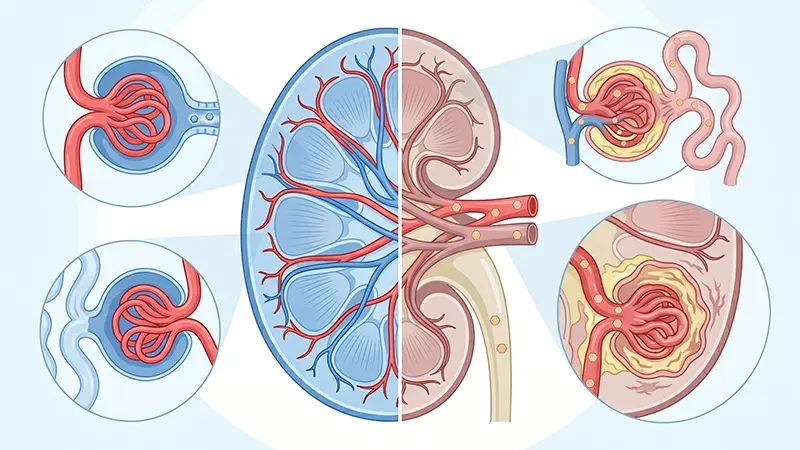
High blood sugar triggers a chain of cellular and vascular changes that progressively destroy kidney tissue. Understanding this process is the first step toward stopping it.
The Early Phase: Hyperfiltration
In the early stages, high glucose forces the kidneys to work harder than they should. Blood flow increases, the glomeruli are pushed past their normal capacity, and this added pressure slowly weakens their walls. Most people feel absolutely nothing during this phase.
Protein Starts Leaking
As the vessel walls weaken, a protein called albumin begins slipping into the urine. This is called albuminuria or microalbuminuria in its early form. It's one of the first signs detectable through a lab test, yet most patients still have no symptoms at this point.
Inflammation and Scarring
Over time, persistently elevated glucose triggers inflammation inside kidney tissue. Healthy cells are replaced by scar tissue through a process called fibrosis. GFR levels in diabetic patients begin to fall and once they do, the damage compounds.
Blood pressure dysregulation is closely tied to this process too. High blood pressure accelerates glomerular injury, and declining kidney function makes blood pressure harder to control. The two conditions feed each other.
How Common Is This, Really?
The numbers are significant:
- Over 35% of adults with diabetes develop chronic kidney disease
- Diabetic nephropathy causes roughly 44% of all new end-stage renal disease cases in the US annually
- Many people with early-stage diabetic kidney disease have no symptoms at all
- African American, Hispanic and Native American populations face disproportionately higher rates of complication
These statistics reflect just how quietly kidney disease in type 2 diabetics moves through its early stages. By the time symptoms appear, significant damage has often already been done.
Early Signs of Kidney Damage in Diabetics
Because symptoms are rare in early stages, most detection happens through routine lab work. That said, some physical signs are worth paying attention to.
Watch for these:
- Foamy or frothy urine (protein leakage)
- Swelling in the feet, ankle, or around the eyes
- Fatigue that isn't explained by anything else
- Frequent urination, especially at night
- High blood pressure that doesn't respond well to management
In lab results, early red flags include:
- Microalbuminuria on a urine albumin-to-creatinine ratio (UACR) test
- Declining eGFR on a metabolic panel
- Rising creatinine levels in the blood
- Worsening HbA1c alongside blood pressure changes
If you have diabetes and haven't had a kidney function panel in the last 12 months, scheduling one is one of the most important things you can do right now.
Stages of Diabetic Nephropathy
Diabetic kidney disease progresses through five stages based on GFR and the degree of kidney damage:
| Stage | GFR Range | What It Means |
|---|---|---|
| Stage 1 | 90 or above | Kidney damage present but function is normal or high |
| Stage 2 | 60 to 89 | Mild reduction in kidney function, often no symptoms |
| Stage 3 | 30 to 59 | Moderate decline; waste begins building in blood |
| Stage 4 | 15 to 29 | Severe decline; preparation for dialysis may begin |
| Stage 5 | Below 15 | Kidney failure, dialysis or transplant required |
Most patients diagnosed at Stage 1 or 2 can slow progression significantly. Reaching Stage 3 without knowing it is common when annual kidney testing isn't part of regular diabetes care.
Risk Factors That Speed Up Kidney Decline
Not everyone with diabetes experiences kidney decline at the same rate. Several factors push things faster.
Poorly controlled blood sugar is the biggest driver. HbA1c levels consistently above 8% strongly correlate with faster progression of diabetic nephropathy. Each reduction in HbA1c meaningfully slows the rate of kidney function loss.
High blood pressure is both a cause and a consequence. It damages kidney vessels directly while also increasing pressure inside the glomeruli. Blood pressure management in diabetic kidney disease is considered one of the most critical interventions there is.
Other contributing factors include smoking, obesity, high dietary sodium and protein, family history of kidney disease and how long someone has had diabetes. Duration matters more than many people expect.
How Doctors Diagnose It
Since diabetic kidney damage is asymptomatic in its most treatable stages, lab testing does the heavy lifting. Current guidelines recommend kidney screening for all adults with type 2 diabetes at diagnosis and annually after that.
Key tests include:
- UACR (urine albumin-to-creatinine ratio): detects early protein leakage, the first sign of kidney involvement
- eGFR (estimated glomerular filtration rate): calculated from a serum creatinine blood test
- BUN (blood urea nitrogen): measures waste product buildup when kidneys underperform
- HbA1c: confirms how much long-term blood sugar is contributing to kidney stress
Two abnormal UACR readings over three months are typically required before diabetic nephropathy is formally diagnosed.
Diabetic Kidney Disease Treatment: What Actually Works
There's no cure for diabetic nephropathy, but the right combination of medical care and lifestyle changes can meaningfully slow its progression.
Blood sugar control remains the foundation. Keeping HbA1c below 7% is the standard target. Newer medications like SGLT2 inhibitors and GLP-1 receptor agonists have shown direct kidney-protective effects in clinical trials, beyond their glucose-lowering role.
Blood pressure management through ACE inhibitors for diabetic nephropathy or ARBs is strongly recommended. These drugs reduce both blood pressure and filtration pressure inside the kidneys. The target is generally below 130/80 mmHg. Many patients don't realize their blood pressure is elevated until significant damage has occurred a pattern explained in detail in our guide on why high blood pressure often goes unnoticed.
Lifestyle adjustments that protect kidney function:
- Reduce sodium and processed food intake
- Limit excess dietary protein
- Stay physically active (150 minutes of moderate activity weekly)
- Quit smoking
- Manage weight to reduce systemic inflammation
Every one of these changes reduces the filtration burden on already-stressed kidneys. They work together, not in isolation.

Conclusion
Diabetic kidney damage is serious, but it's also one of the most manageable complications when caught early. The window for meaningful intervention is wide in the early stages and narrow once significant function is lost. Don't wait for symptoms.
At Springfield Medical Clinic, patients with diabetes receive comprehensive chronic disease management built around protecting long-term health. The clinic provides kidney function monitoring, blood pressure management, HbA1c tracking, and personalized care plans, all under one roof.
If you have diabetes, regular kidney screening can help detect problems long before symptoms appear. Springfield Medical Clinic provides comprehensive diabetes management, kidney health monitoring and preventive care to help patients stay ahead of complications. Book an appointment today and take a proactive step toward protecting your long-term health.
Frequently Asked Questions
- What is the first sign of kidney damage in a person with diabetes?
Microalbuminuria, small amounts of protein in the urine, is usually the earliest detectable sign, showing up on a lab test before any physical symptoms appear. - Can diabetic kidney disease be reversed?
Early-stage damage can be slowed and stabilized, but structural scarring from advanced stages cannot be reversed. - How fast does diabetic nephropathy progress without treatment?
Without intervention, kidney function can decline by 4 to 12 mL per year; with proper treatment, this can slow to 1 to 2 mL per year or stabilize entirely. - What blood sugar level causes kidney damage?
There's no single threshold; it's sustained elevation over time, particularly HbA1c consistently above 8%, that drives progressive kidney damage. - Are ACE inhibitors recommended for everyone with diabetic kidney disease?
ACE inhibitors or ARBs are strongly recommended for most patients, as they lower both blood pressure and filtration pressure inside the kidneys; your physician determines the right option based on your health profile.