Published on:21-04-2026
Your chest tightens. Your heart is pounding. You can't catch your breath. The panic sets in fast, and so does the question: is this a panic attack or a heart attack?
It's one of the most unsettling moments a person can experience, and the confusion is completely valid. The panic attack vs heart attack distinction isn't always obvious, because both conditions can hit hard, fast, and without warning.
Understanding what separates them could genuinely save your life.
Table of Contents
- What Is a Panic Attack?
- What Is a Heart Attack?
- Overlapping Symptoms
- At a Glance: Panic Attack vs Heart Attack
- The Key Differences Explained
- Symptoms That Are More Common in Women
- Can You Have a Heart Attack Without Knowing It?
- What to Do in the Moment
- Can Anxiety Affect the Heart Long-Term?
- When to See a Doctor
- Conclusion
- Frequently Asked Questions
What Is a Panic Attack?
A panic attack is a sudden episode of overwhelming fear or intense anxiety triggered by your body's fight-or-flight response. There doesn't always need to be a real threat. Your nervous system simply fires the alarm, and your body reacts as though danger is present.
Panic disorder symptoms include a racing heart, shortness of breath, chest tightness, dizziness, and a terrifying sense that something is very wrong. These episodes can happen during sleep, at rest, or even on a calm afternoon. According to the National Institute of Mental Health, nearly 3% of U.S. adults experience panic disorder in any given year, with women more commonly affected.
The key detail: panic attacks are not life-threatening, but they are real. They are not "just in your head."
What Is a Heart Attack?
A heart attack, medically called myocardial infarction, is a medical emergency. It happens when blood flow to part of the heart muscle is blocked, usually by a blood clot or plaque buildup in the arteries. When that blockage cuts off oxygen, the heart muscle begins to suffer damage.
Unlike panic attacks, heart attacks are directly tied to physical causes: coronary artery disease, high blood pressure, high cholesterol, smoking, diabetes, and family history all increase risk. Heart attacks don't resolve on their own. Without treatment, they get worse.
Overlapping Symptoms: Why the Confusion Happens
Both conditions share a frustrating number of symptoms:
- Chest pain or tightness
- Shortness of breath
- Rapid heartbeat (tachycardia)
- Sweating
- Dizziness or lightheadedness
- Nausea
Because the body only has so many ways to signal distress, the physical experience of both can feel nearly identical. This is especially true during a first-time panic attack, when there's no prior experience to compare it to.
At a Glance: Panic Attack vs Heart Attack
Before breaking it down further, here's a quick reference:
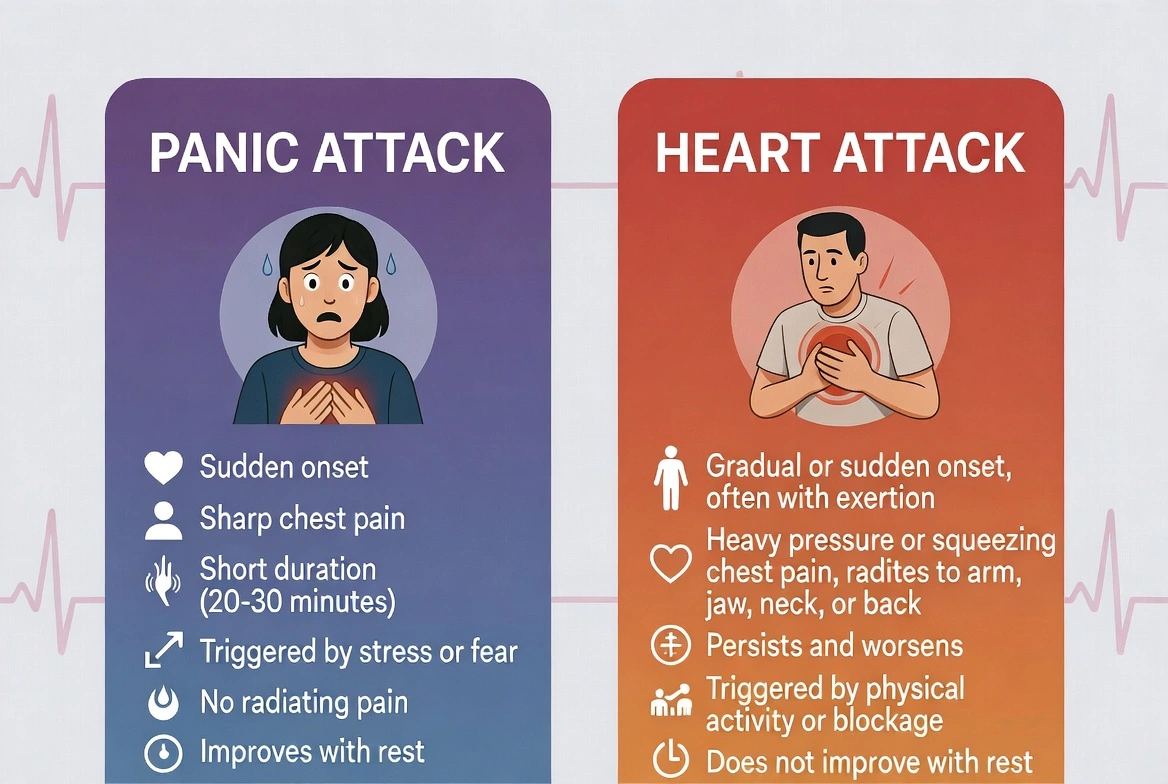
| Feature | Panic Attack | Heart Attack |
|---|---|---|
| Onset | Sudden, peaks within 10 minutes | Gradual or sudden, often with exertion |
| Chest Pain | Sharp, stabbing, stays in chest | Heavy pressure or squeezing, radiates outward |
| Duration | Fades within 20 to 30 minutes | Persists and worsens without treatment |
| Trigger | Stress, fear, or no clear reason | Physical activity or arterial blockage |
| Radiating Pain | No | Yes, to arm, jaw, neck, or back |
| Response to Rest | Improves with rest and calming | Does not improve with rest |
| Extra Symptoms | Fear, trembling, tingling | Cold sweats, nausea, fatigue |
The Key Differences Explained
Nature of the Chest Pain
Chest pain from anxiety vs cardiac causes differs in a very specific way.
With a panic attack, the pain is typically sharp, stabbing, and stays in the chest.
With a heart attack, it's more of a heavy, crushing pressure, often described as someone sitting on your chest. That pressure frequently radiates outward down the left arm, up to the jaw, into the neck or back. Radiating arm pain is one of the clearest distinguishing signs of a heart attack.
Onset and Duration
Panic attacks come on suddenly and reach peak intensity within about 10 minutes, then ease within 20 to 30 minutes, often without any treatment.
Heart attack symptoms may build gradually and do not resolve without medical intervention. If your chest pain persists beyond 10 minutes and isn't improving, that's a serious red flag.
It's also worth knowing that tachycardia driven by anxiety can closely mimic cardiac tachycardia. Both make your heart race at the same alarming speed, but one fades with calm, and the other doesn't.
Triggers
Panic attacks are often tied to stress, emotional situations, or sometimes nothing at all. Heart attacks more commonly occur during or after physical exertion such as climbing stairs, exercising, or shoveling snow.
Response to Calming Techniques
If you sit down, breathe slowly, and your symptoms ease within minutes, a panic attack is more likely.
Heart attack symptoms do not respond to breathing exercises or rest, and that distinction matters enormously.
Symptoms That Are More Common in Women
This deserves its own mention. Women are more likely to experience atypical heart attack symptoms, including nausea, fatigue, back or jaw pain, and just a general feeling that something is off. These presentations are frequently mistaken for anxiety. Because of this, women's cardiac symptoms have historically been undertreated. If anything feels unusual, especially alongside chest tightness or shortness of breath, don't minimize it.
Can You Have a Heart Attack Without Knowing It?
Yes, and this surprises many people. Silent heart attacks occur with minimal or no noticeable symptoms. Some people only discover they've had one during a routine EKG or blood test. Others look back and recall a vague episode of fatigue or mild discomfort they dismissed at the time. This is one more reason regular checkups matter, especially if you carry risk factors for coronary artery disease.
What to Do in the Moment
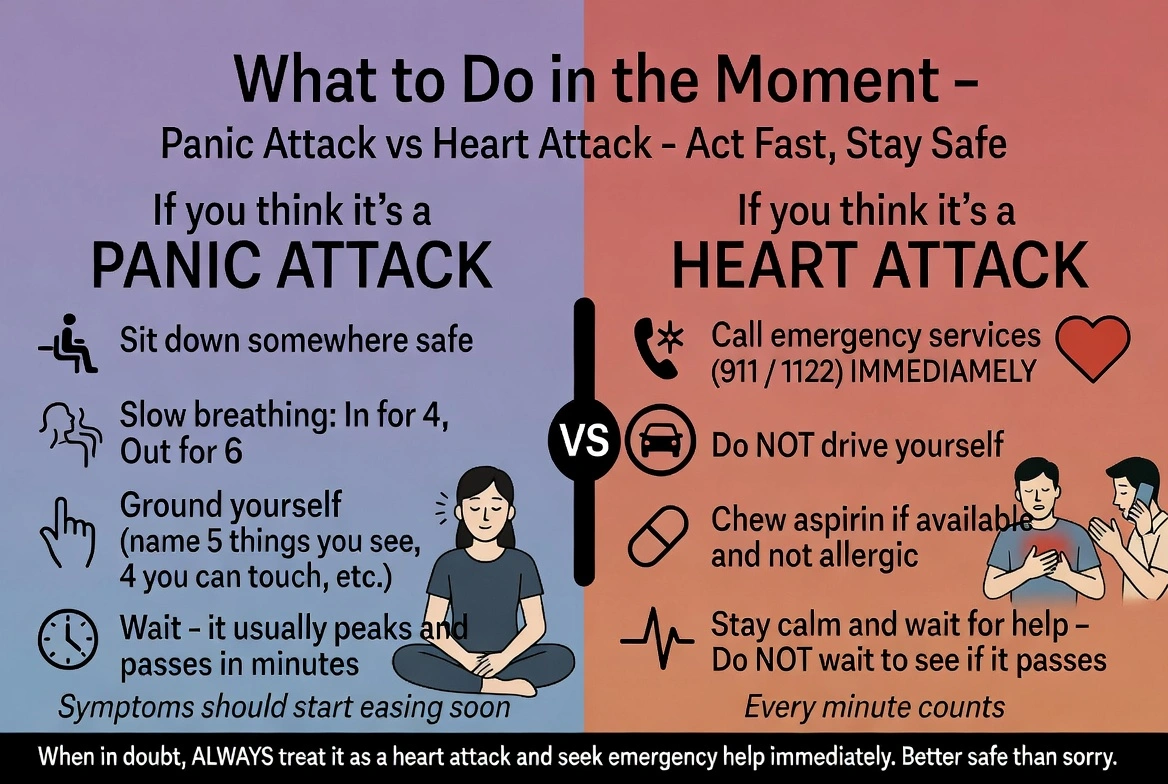
If you think it might be a panic attack:
- Sit down somewhere safe
- Try slow, controlled breathing in for 4 counts, out for 6
- Ground yourself by naming things you can see and feel around you
- The episode should peak and then ease within minutes
If you think it might be a heart attack:
- Call 911 immediately
- Do not drive yourself to the hospital
- Chew an aspirin if available and you are not allergic
- Do not wait to see if it passes on its own
When in doubt, always treat it as a cardiac emergency. Doctors would far rather see you in the ER and confirm it was panic-related than have you wait at home during a real heart attack.
Can Anxiety Affect the Heart Long-Term?
Chronic stress and repeated panic disorder symptoms put real strain on the cardiovascular system over time. People with anxiety disorders face a measurably higher risk of developing coronary artery disease. This is why managing mental health is not separate from managing heart health. The connection between stress and heart disease risk is well-established, and ignoring one often means the other suffers too.
When to See a Doctor
Don't wait if any of the following apply:
- You've had more than one unexplained chest pain episode
- Your panic attacks are increasing in frequency or intensity
- You have heart palpitations that feel new or different from your usual anxiety symptoms
- You have risk factors like high blood pressure, high cholesterol, diabetes, or a smoking history
- Something simply feels different this time
An EKG, blood tests, and a thorough clinical evaluation can rule out cardiac causes and give you real answers. The anxiety heart attack difference is something a provider can confirm through proper testing, not just reassurance.
Conclusion
Panic attacks and heart attacks can look frighteningly similar in the moment, but the differences in pain quality, duration, triggers, and how your body responds can guide you toward the right action. Neither should ever be dismissed.
At Springfield Medical Clinic, our team is experienced in evaluating chest pain, assessing cardiovascular risk, and supporting patients managing anxiety or chronic conditions. If you've had a scary episode and still don't have clear answers, that's exactly what we're here for. Evidence-based care, built around you.
Frequently Asked Questions
- Can a panic attack feel exactly like a heart attack?
Yes, both share chest pain, rapid heartbeat, and shortness of breath, making them genuinely difficult to tell apart in the moment. - How long does a panic attack last compared to a heart attack?
A panic attack typically peaks within 10 minutes and fades within 20 to 30 minutes, while heart attack symptoms persist and worsen without treatment. - Can anxiety cause heart palpitations?
Yes, heart palpitations from anxiety are caused by adrenaline surges and are generally harmless, but should be evaluated if they're new or frequent. - Is radiating arm pain always a sign of a heart attack?
Not always, but pain spreading to the arm, jaw, or neck is strongly associated with a heart attack and warrants calling 911 immediately. - Can you have a heart attack without knowing it?
Yes, silent heart attacks occur with few or no noticeable symptoms and are often only discovered through a routine EKG or blood test. - Does stress increase heart attack risk?
Chronic stress is linked to higher risk of coronary artery disease, making stress management an important part of long-term heart health.